

Extractions
Driftwood Dental Studio performs tooth extractions in Wilmington, NC for teeth that are too damaged, decayed or infected to save, for problem wisdom teeth, and for teeth that need to come out before dentures or implants. Dr. Jenny Turek and Dr. Prasad Vasamsetti remove teeth here in our office under local anesthetic, with nitrous oxide or oral sedation if you want it. Before any tooth comes out, we talk with you about what will replace it, because an empty space causes problems of its own.
Tooth bothering you? Call (910) 834-8787 or request an appointment online.
When a tooth needs to come out
We save teeth whenever we can; a filling, crown or root canal is usually better than an extraction. But some teeth cannot be saved, and leaving them in can cause pain, infection and damage to the teeth around them. Common reasons to remove a tooth:
- Decay or a fracture that goes below the gumline or into the root, leaving too little tooth to rebuild
- An infection that a root canal cannot resolve, or that has come back
- Advanced gum disease that has loosened the tooth
- Wisdom teeth that are impacted, crowding other teeth, or repeatedly getting infected
- Teeth that need to be removed before a denture or an implant
Simple and surgical extractions
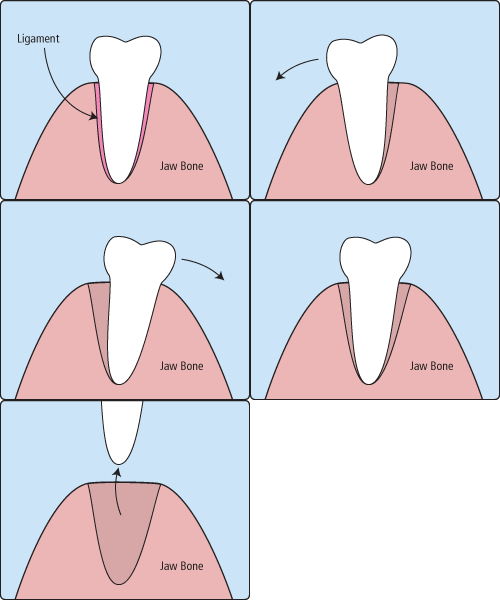
A simple extraction is a tooth that is fully above the gum and can be loosened and lifted out in one piece. A surgical extraction is for a tooth that is broken at the gumline, has curved roots, or has not fully come in, such as an impacted wisdom tooth; it involves a small incision and takes longer. After your exam and X-ray, we will tell you which kind you need and what to expect.
What to expect
- Exam and X-ray. We look at the tooth, the roots and the bone around it, and confirm that an extraction is the right call.
- Numbing. Local anesthetic makes the area completely numb. You will feel pressure, but not pain. If you are anxious, nitrous oxide (laughing gas) takes the edge off, and oral sedation is available for longer appointments.
- The extraction. Simple extractions are usually quick once you are numb; surgical extractions take longer.
- Planning ahead for an implant. If you plan to replace the tooth with an implant, a bone graft may be needed to keep the bone in shape. We do bone grafts here and will tell you up front if one makes sense for you.
- Going home. You leave with gauze and written aftercare instructions. Most patients are back to their normal routine within a day or two.
These short animations show a simple extraction, a surgical extraction, aftercare, and how a bone graft can preserve the socket for a future implant.
Cost and insurance
The cost of an extraction depends on whether it is simple or surgical and whether a bone graft is needed (bone grafts run $500 to $3,000). Most dental plans cover part of the cost of an extraction. We are in-network with more than 30 dental plans, including Delta Dental, Cigna, MetLife, Aetna, Blue Cross Blue Shield, UnitedHealthcare, Humana and Guardian. We verify your benefits and give you a written estimate before treatment, and we offer CareCredit and Sunbit financing. See our Financial Information page.
Replacing the tooth
Unless it is a wisdom tooth, a missing tooth should usually be replaced. The neighboring teeth drift into the gap, the opposing tooth moves out of position, and the jawbone where the root was begins to shrink. The options are a dental implant, which replaces the root and the tooth and is the longest-lasting choice; a bridge, which is anchored to the neighboring teeth; or a denture. Both of our dentists have completed the Fellowship program of the International Congress of Oral Implantologists and place most implants here in our office. See our Dental Implants page.
Healing and aftercare
Bite on the gauze for 30 to 45 minutes, then leave the area alone. For the first 24 hours, avoid straws, smoking, spitting and vigorous rinsing, because they can dislodge the blood clot that protects the socket. Eat soft, cool foods and keep brushing the rest of your mouth. Ice on the cheek for 15 minutes at a time helps with swelling, and over-the-counter pain relievers handle the soreness for most patients. Call us if pain gets worse after the third day instead of better, if you notice a bad taste or odor, or if bleeding does not slow down.
Frequently asked questions about tooth extractions
Does getting a tooth pulled hurt?
Not during the procedure. The area is fully numb; you will feel pressure but not pain. Afterward, expect some soreness for a couple of days, which over-the-counter pain relievers usually manage.
Do you offer sedation for extractions?
Yes. Nitrous oxide is available, and oral sedation for longer appointments or anxious patients. Abby, our certified therapy dog, is often in the office too.
How long does it take to heal?
Most patients feel normal within two to three days. The gum closes over the socket in a week or two, and the bone underneath fills in over the following months.
What should I eat after an extraction?
Soft, cool foods for the first day, such as yogurt, smoothies (without a straw), applesauce, mashed potatoes and eggs. Avoid hot, crunchy, spicy and seedy foods for a few days, and chew on the other side.
Do I have to replace the tooth?
Wisdom teeth, no. For other teeth we usually recommend it, because shifting and bone loss start within months. We will go over implant, bridge and denture options and tell you which fits your mouth and budget.
Visit us
Driftwood Dental Studio is at 5225 Sigmon Rd, Suite 130, Wilmington, NC 28403, just off Market Street near Mayfaire. We are open Monday through Wednesday, 8:00 AM to 5:00 PM; Thursday, 8:00 AM to 4:00 PM; and Friday, 7:00 AM to 12:00 PM. Call (910) 834-8787 or request an appointment online.
